


Latest Version
February 22, 2026
Century Games PTE. LTD.
Casual
0
com.ageofeternity.global
Report a Problem
More About :game
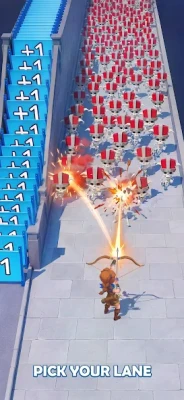
The game's most distinctive mechanic is its multiplier-gate system. Instead of simply watching your squad fight, you actively choose paths during a run. Each gate can change your team's strength, so selecting the right lane can make the difference between an easy encounter and a difficult battle.
Alongside the run-based action, you can recruit heroes from different factions, train your champions, strengthen your army, and continue improving your squad over time. Google Play currently categorizes the game as an Idle RPG, while also listing single-player, multiplayer, competitive multiplayer, battling, and field elements.
The World of Oasis
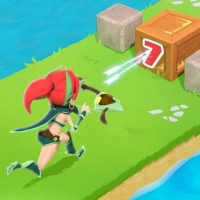
The story takes place in Oasis, a fantasy realm threatened by spreading darkness. As the chosen Commander, your objective is to gather legendary heroes and build enough power to confront the forces threatening the land.
The setting is designed around the idea of continual progression. Your army becomes stronger, encounters become more demanding, and successful runs provide resources that can be used to develop your team further.
Rather than relying entirely on traditional turn-based combat, Valor Legends: Shoot & Run puts more emphasis on quick decisions during movement. The lane you choose determines which multiplier your squad receives and can significantly affect the strength of the force entering the next encounter.
What Makes Valor Legends: Shoot & Run Different?
The main attraction is the combination of idle RPG progression and swipe-based lane decisions.
You are not simply sending a team into an automatic battle. During runs, you need to look at the available gates and decide which route offers the better opportunity to increase your squad's power.
The basic gameplay loop is:
Build and strengthen your hero team.
Start a run.
Choose lanes and multiplier gates.
Increase your squad's power.
Fight enemy waves.
Collect rewards and resources.
Improve your heroes.
Attempt stronger encounters.
This creates a straightforward gameplay cycle that is easy to understand but gives players something to think about during each run.
Valor Legends: Shoot & Run Game Information
| Feature | Details |
|---|---|
| Game Title | Valor Legends: Shoot & Run |
| Package ID | com.ageofeternity.global |
| Developer | Century Games PTE. LTD. |
| Genre | Role Playing |
| Game Type | Idle RPG |
| Gameplay | Lane selection, multiplier gates, squad battles |
| Heroes | Collectible heroes from different factions |
| Modes | Single-player and multiplayer elements |
| Competitive Play | Yes |
| Platform | Android and Windows |
| Monetization | Ads and in-app purchases |
| Content Rating | Everyone 10+ |
| Downloads | 5M+ on Google Play |
| Reviews | 180K+ listed reviews |
| Developer | Century Games PTE. LTD. |
Google Play currently lists 5M+ downloads, more than 180,000 reviews, ads and in-app purchases, and Android/Windows availability.
Core Gameplay Mechanics
1. Choose the Right Lane
Lane selection is the central mechanic of Valor Legends: Shoot & Run.
During a run, you encounter gates with different effects. Your objective is to guide your squad through the option that gives you the greatest increase in power.
Do not automatically choose the largest-looking number without considering what happens afterward. A strong multiplier is useful only if your squad can take advantage of it and survive the battles that follow.
2. Multiply Your Squad
Multiplier gates can rapidly increase the size or strength of your force.
This creates an important decision:
Immediate power versus better long-term positioning.
A gate that produces a substantial increase can be particularly valuable before a difficult enemy wave. On the other hand, a smaller increase may sometimes leave you in a better position depending on the available route.
3. Fight Enemy Waves
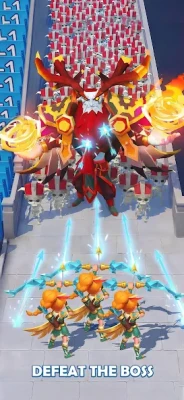
After increasing your strength, your squad moves into combat against enemies.
The game's official description emphasizes that stronger squads can clear waves more quickly while earning valuable resources.
Your goal is therefore not simply to survive one encounter. You want to create enough momentum that each successful stage helps prepare your army for the next one.
4. Recruit Legendary Heroes
Hero collection is the second major part of the game.
Heroes come from different factions, giving you a reason to experiment with different team combinations instead of investing blindly in every character.
Focus your resources on a manageable core roster rather than trying to upgrade everyone equally.
5. Train Your Champions
Once you have established your main team, continue improving your strongest heroes.
A focused investment strategy is usually more efficient than spreading resources across a large number of characters you rarely use.
Complete Valor Legends: Shoot & Run Strategy Guide
Early-Game Strategy
The beginning of the game is the ideal time to learn the lane system.
Do not worry about making every decision perfectly. Instead, pay attention to how different gates affect your squad.
Try to answer three questions before every choice:
How much power will this gate give me?
What enemy encounter comes next?
Which route leaves my squad in the strongest position?
This habit becomes increasingly useful as your progression continues.
Build a Core Team
One of the easiest mistakes in hero-based RPGs is upgrading too many characters simultaneously.
Instead, create a core group of heroes that you use regularly.
Prioritize:
Your primary damage dealers
Heroes that help your team survive
Characters that provide useful combat utility
Heroes that fit your preferred team composition
Once your core team is stable, you can experiment with additional characters.
Don't Ignore Team Balance
A team consisting entirely of offensive characters may look powerful, but raw damage does not always solve every encounter.
A balanced squad can provide:
Damage
Survivability
Consistent progression
Better performance against difficult encounters
When a stage repeatedly defeats you, changing your team composition may be more useful than simply repeating the same battle.
How to Choose Multiplier Gates
This is one of the most important skills to develop.
Look Beyond the First Number
Suppose you have two routes:
A moderate multiplier with a relatively manageable encounter
A larger multiplier followed by a much stronger enemy
The second option is not automatically better.
Your objective is to maximize the final strength of your squad, not simply collect the biggest multiplier at one particular moment.
Use Large Multipliers at the Right Time
A large multiplier becomes especially valuable when your current force is already strong enough to capitalize on it.
If your squad is extremely weak, increasing a weak foundation may not be enough to overcome the next major obstacle.
Think About Momentum
A successful run often has a snowball effect:
More power → easier battles → more rewards → stronger heroes → more power.
Your lane decisions should help maintain this momentum.
How to Progress Faster
Concentrate Your Resources
Do not waste valuable resources upgrading characters that are only temporary members of your roster.
Choose your main heroes and make them the foundation of your progression.
Complete Available Activities
Because the game includes idle RPG progression alongside active run gameplay, check the game regularly for available rewards and progression opportunities.
Small rewards accumulate over time.
Improve Before Forcing a Difficult Stage
If you repeatedly fail at the same point, consider it a progression signal.
Instead of endlessly attempting the same encounter, return to your hero development:
Upgrade your main characters.
Improve your squad composition.
Check whether another hero works better.
Strengthen your overall team.
Return to the difficult stage afterward.
Advanced Strategy
Build Around Your Strongest Heroes
Your best characters should form the center of your main formation.
Do not choose heroes simply because they are new. Compare how they actually contribute to the team.
A newly acquired character may be useful, but replacing a well-developed hero can temporarily make your squad weaker.
Maintain a Development Priority
A practical upgrade order is:
Main damage source → frontline/survivability → secondary damage → utility → experimental heroes
This is not a rigid rule for every team, but it provides a useful starting point when resources are limited.
Adapt When Progress Slows
If your progression suddenly becomes slower, look for the source of the problem.
Ask:
Is my team underpowered?
Am I choosing inefficient lanes?
Is my formation lacking survivability?
Have I spread upgrades across too many heroes?
Am I relying on one type of character?
Would another team composition work better?
Changing one variable at a time makes it easier to identify what actually improves your results.
Beginner Tips for Valor Legends: Shoot & Run
1. Learn the lane system first.
The multiplier-gate mechanic is central to the game's identity, so understanding it early will improve your runs.
2. Don't upgrade everyone.
Concentrate resources on a core group.
3. Watch what happens after each gate.
The immediate multiplier is only part of the decision.
4. Keep your team balanced.
Damage is important, but a squad that cannot survive will struggle to maintain momentum.
5. Use your strongest heroes consistently.
Constantly rebuilding your team can slow progression.
6. Treat difficult stages as information.
Repeated failure usually means your team or progression needs adjustment.
7. Keep collecting rewards.
Idle RPG progression rewards regular engagement.
8. Experiment with your roster.
Different heroes can change how your team performs.
Common Mistakes to Avoid
Upgrading Too Many Heroes
This can leave your entire roster moderately developed instead of giving you a genuinely powerful core team.
Always Taking the Biggest Multiplier
The largest number is tempting, but the route that produces the best overall result is not necessarily the one with the biggest immediate multiplier.
Ignoring Team Composition
A powerful individual hero cannot always compensate for a poorly balanced squad.
Spending Resources Without a Plan
Before upgrading a character, consider whether that hero is likely to remain part of your main team.
Repeating the Same Failed Run
If the same encounter keeps stopping you, change something rather than simply repeating the attempt.
Idle Progression and Long-Term Growth
Valor Legends: Shoot & Run is categorized as an Idle RPG on Google Play, so progression is not limited to active battles. The game is built around continual growth, with stronger heroes and forces allowing players to tackle increasingly demanding encounters.
This makes the game particularly suited to players who enjoy gradually improving a roster rather than completing the entire experience in one sitting.
The best long-term approach is consistency:
Collect → upgrade → test → adjust → progress.
Multiplayer and Competitive Elements
Google Play currently categorizes Valor Legends: Shoot & Run as both multiplayer and competitive multiplayer in addition to single-player.
This gives the game a broader progression structure than the basic lane-running mechanic suggests. Building a strong roster can therefore matter beyond ordinary PvE progression.
Players who enjoy competition should pay particular attention to long-term roster development rather than focusing only on their performance in individual runs.
Events and Recent Updates
The current Google Play listing shows a Surf's Up event, along with new Phantasms including Song of Dream · Mikayla: Midsummer Fantasy and Demonic Godslayer · Corentin: Seaside Mania, plus bug fixes.
The listing also shows the game being updated in 2026 and available on both Android and Windows.
Because live events can change, players should check the in-game event section for the currently available rewards and activities.
Honest Look at the Game
Valor Legends: Shoot & Run has a fairly unusual combination of lane-based decision making, squad growth, hero collection, and idle RPG progression.
The lane mechanic gives the game more interaction than a completely passive idle RPG, while hero development provides a longer-term reason to keep improving the roster.
However, the Google Play listing also shows a relatively low current rating compared with the game's large review count. Some published reviews criticize progression speed, resource availability, or the relationship between free progression and spending. These are player opinions rather than universal experiences, but they are worth considering when deciding whether the game's progression model matches your preferences.
For players who enjoy collectible heroes and gradual progression, the combination can be appealing. Players looking for a highly skill-driven action RPG may find the idle and progression-focused structure less demanding.
Pros and Cons
Pros
Simple lane-based controls
Multiplier gates add decision-making to runs
Large-scale squad growth
Collectible heroes from different factions
Idle RPG progression
Single-player and multiplayer elements
Competitive gameplay elements
Available on Android and Windows
Regular events and new content
Cons
Progression can become grind-focused
Hero collection introduces randomized elements
Ads and in-app purchases are present
Competitive progression may place more importance on long-term investment
The current Google Play rating is mixed despite a large number of reviews
Who Should Play Valor Legends: Shoot & Run?
This game is a good match for players who enjoy:
Idle RPGs
Hero collection games
Fantasy combat
Squad-building
Short gameplay sessions
Upgrade-based progression
Multiplier and lane-selection mechanics
Competitive RPG systems
It may be less suitable for players primarily looking for a traditional action RPG with direct manual combat throughout every encounter.
Frequently Asked Questions
What is Valor Legends: Shoot & Run?
Valor Legends: Shoot & Run is a fantasy idle RPG from Century Games that combines hero collection, squad development, multiplier gates, lane selection, and battles against enemy waves.
Is Valor Legends: Shoot & Run free to play?
The Google Play listing offers the game with ads and in-app purchases.
Can you play Valor Legends: Shoot & Run on PC?
Google Play currently lists the game as available on Android and Windows.
What is the main gameplay mechanic?
The distinctive mechanic is choosing lanes through multiplier gates during runs. Your decisions can increase the power of your squad before battles.
Does Valor Legends: Shoot & Run have hero collection?
Yes. The game allows players to recruit legendary heroes from different factions and train their champions.
Is Valor Legends: Shoot & Run multiplayer?
Google Play categorizes it as both multiplayer and competitive multiplayer while also listing single-player gameplay.
What should beginners upgrade first?
Focus on a small core group of heroes rather than spreading resources across your entire roster. Build a balanced team and expand your investments once your main squad is established.
What should I do when I cannot pass a stage?
Review your team composition, upgrade your primary heroes, reconsider your lane choices, and strengthen your squad before trying the stage again.
Valor Legends: Shoot & Run YouTube Gameplay
For players who want to see the lane-selection mechanic and hero progression in action, a gameplay video can be useful before starting the game.
Recommended section title:
Watch Valor Legends: Shoot & Run Gameplay
You can embed a current YouTube gameplay video here showing:
Early-game progression
Lane and multiplier choices
Hero recruitment
Squad battles
Character upgrades
Later-stage gameplay
When adding a video to the page, choose gameplay that clearly shows the current version of the game rather than an old promotional trailer.
Final Thoughts
Valor Legends: Shoot & Run takes the familiar hero-collection RPG formula and adds a simple but important interactive layer through its lane and multiplier-gate system.
The central strategy is not simply to collect stronger heroes. Successful progression comes from combining smart lane choices, focused upgrades, balanced team building, and consistent resource management.
If you approach each run with the goal of maximizing your squad's overall momentum rather than chasing the biggest individual multiplier, you will have a much clearer framework for progressing through the game.
Rate the Game
User Reviews















Popular Games



















 Android
 iOS
 Windows
 Xbox